Feeling lost is a strange experience because it rarely looks dramatic.
You are not lying on the floor staring at the ceiling. You are usually just… going through your day. Doing the things you are supposed to do. Wondering why none of it feels anchored to anything.
This feeling is usually mislabeled. It gets called laziness, burnout, or ingratitude. Sometimes it even gets called depression.
But very often, none of those fit. The person still cares. They still try. They just do not feel oriented toward anything that makes sense anymore.
Feeling lost is not a verdict on who you are. It is a signal that something fundamental about direction and meaning has dropped out of the picture.
The Three Reasons You Feel Lost
You feel lost when at least one of three things becomes unclear:

- You do not know where you are.
- You do not know where you are going.
- You do not know how to get from here to there.
Most people assume lostness means “I don’t know my purpose.” That is only one version.
- Sometimes you know what you want but see no credible path.
- Sometimes you are moving quickly but have no idea what you are moving toward.
- Sometimes you have a path but no conviction that it leads anywhere meaningful.
Disorientation happens when your internal map stops matching your lived experience.
Often, it is not just the map that collapses. It is the story you were telling yourself about who you are. The identity that once made sense no longer explains your life. The metrics that once motivated you no longer feel convincing. The narrative expires.
And when that happens, effort starts to feel empty and pointless. Like building sand castles too close to the shore. You can work carefully for hours. The tide does not care.
Feeling Lost Is Not the Same as Being Lazy or Broken
Across cultures and traditions, feeling lost is rarely framed as laziness, weakness, or personal failure. It is understood as a loss of orientation, a misalignment between life and meaning, effort and direction.
In Buddhism, feeling lost is treated as misunderstanding rather than personal failure. It arises when desire replaces clarity and effort is spent chasing relief instead of insight. Trying harder does not solve it, because the problem sits at the level of perception.
In Christian thought, feeling lost reflects disordered priorities. Life becomes unmoored when comfort, status, or self-interest outrank truth and responsibility. A person may function well outwardly while feeling inwardly restless. This state signals misalignment, not worthlessness.
In more obscure, traditional cultures, feeling lost was understood as a loss of role and belonging. Identity was shaped through responsibility, ritual, and clear transitions into adulthood. When these structures faded, people struggled to locate themselves.
Why This Feeling Often Appears in Adulthood
For the majority of the population, life before adulthood comes with rails.
School. Grades. Milestones. Clear expectations. You may not like them, but they tell you where to go next. Even confusion has a structure. Adulthood removes those rails.
You are expected to decide what matters, what to pursue, and what kind of life you are building. Responsibility increases immediately.
Psychologists describe a phase often called a quarter-life crisis, commonly experienced in the twenties and early thirties.

Research and cultural analysis show it is marked by anxiety, doubt, and disappointment surrounding career, relationships, and direction as independence rises before clarity forms.
Up to 70% of adults report experiencing some version of this transition as they move into fuller independence. So you are not special.
Some people feel most lost not when they fail, but right after they succeed. The promotion lands. The milestone is achieved. The external validation fades faster than expected. And suddenly there is no obvious next chapter.
Humans are wired to pursue, not to rest at the peak. When the next aim is unclear, the silence is unsettling.
Personal Growth Can Feel Like an Identity Crisis
If you never want more from your life, you rarely feel lost. You follow the template. You measure yourself by familiar metrics. You stay within predictable boundaries.
There is nothing inherently wrong with that. But the moment you want something deeper or different, the ground moves. You start asking questions your old identity cannot answer.
Why am I doing this? Who is this for? What actually matters?
Those questions dismantle the old map. And for a while, there is nothing in its place. That gap feels like being lost.
The paradox is simple. The very instinct that pushes you to grow is the same instinct that exposes you to uncertainty.
If you can tolerate that uncertainty without running back to the old version of yourself, you expand. If you cannot, you settle. You revert to your old ways of thinking and living.
What to Do When You Don’t Know What to Do
1. Take Care of the Machine
This one is so obvious yet some people have a hard time grasping the idea that if you treat your body like shit, your mind will follow.
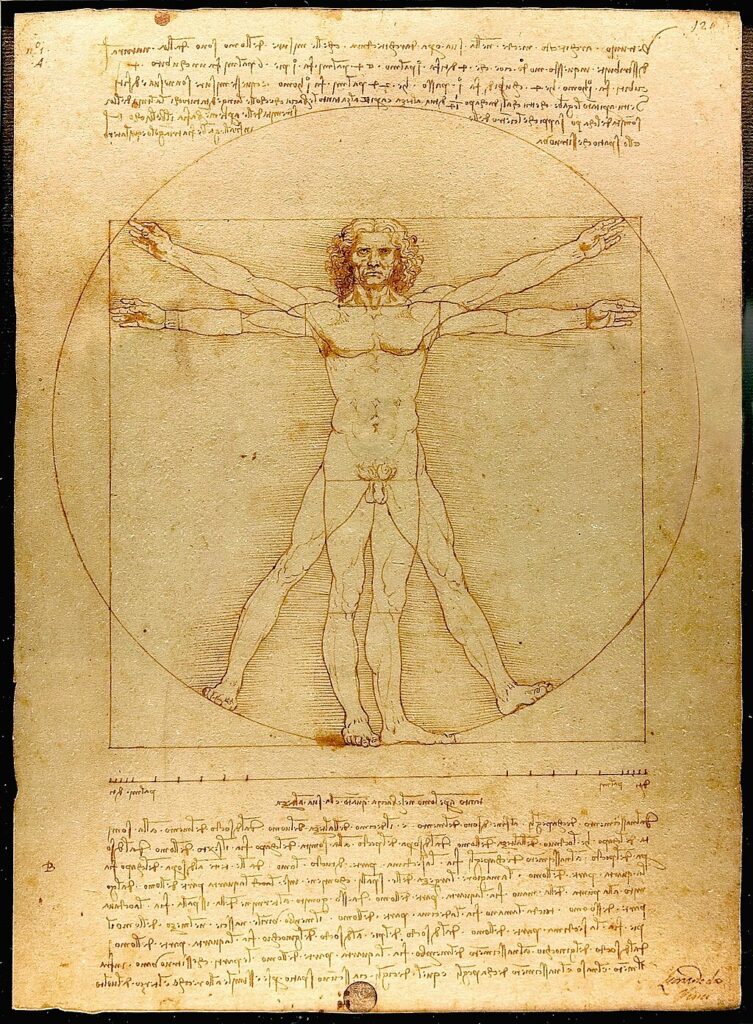
You can’t build a clear mind inside a body you are actively sabotaging.
People talk about purpose and direction as if they exist in isolation from biology. They do not.
Your brain is part of your body. It runs on chemistry. Hormones regulate mood, motivation, focus, and stress. If those systems are unstable, your thinking will be unstable too.
Sleep deprivation alone increases anxiety, lowers impulse control, and amplifies negative thinking. Chronic stress elevates cortisol, which narrows perception and pushes you toward short term decisions. Low movement reduces dopamine sensitivity, which makes effort feel heavier than it actually is.
Then you sit there wondering why everything feels pointless.
Normalize your sleep first.
Go to bed at roughly the same time. Wake up at roughly the same time. Even on weekends. You do not need perfection. You need consistency.
Move your body daily.
Walk. Lift. Stretch. Do something that reminds your nervous system that you are not in danger. Physical activity regulates stress hormones and improves cognitive flexibility. It is one of the most reliable ways to stabilize mood without medication.
Get sunlight.
Morning light exposure helps regulate circadian rhythm and supports hormonal balance. It sounds simple. It is simple. That does not make it trivial.
Eat real food.
Not engineered snacks created in labs for the ideal ratio of salt, sugar, fats, and ability to cause addiction. Not liquid sugar. Not meals that come with a marketing campaign attached.
Protein and healthy fats should be the foundation. They stabilize energy, support hormone production, and reduce the blood sugar swings that wreck focus and mood.
When your meals are built on processed carbohydrates and sugar, your energy spikes and crashes. Your patience shortens. Your thinking narrows. Your stress response increases. Yes, this includes things like bread and pasta, which sucks.
You do not need to obsess over macros, but you should understand that food is not just fuel. It is hormonal input.
Stable blood sugar supports a stable mood. Adequate protein supports neurotransmitter production and body building. Dietary fats are essential for hormone regulation.
Modern metabolic dysfunction is driven by multiple forces. Ultra processed food, chronic stress, low movement, and constant access to refined carbohydrates all play a role. Simplify your inputs. Eat whole foods. Prioritize protein.
Carbohydrates are not evil. But they are not neutral either. If your life is sedentary and your stress high, flooding your system with quick energy you do not use is not doing you favors. I won’t go into a lecture on nutrition now, but the reason the world is turning more obese and sick every year is because of overconsumption of ultra-processed carbs.
Earn them with activity. Let your body use what you give it. Do not aim for perfection. You will fail along the way. Just try to be consistent.
2. Shrink the Horizon
When you do not know what you are doing, the mistake is trying to solve your entire life at once.
The brain does not handle that well. Too many open possibilities increase stress and reduce confidence.
Shrink the horizon. Instead of asking, “What should I do with my life?” ask, “What is the next rational move?”
Not the grandmaster plan. Just the next step. One conversation you have been postponing. One task you have avoided. One habit that clearly needs correction.
Small commitments reduce cognitive load. They close open loops. They remove the background chatter that keeps your nervous system agitated all day.
You do not need to redesign your identity in a weekend. You are not launching a personal rebrand. You simply need to move one degree closer to something stable.
It might mean applying for the job even if the description scares you. It might mean scheduling the check up instead of diagnosing yourself online at midnight. It might mean closing the ten browser tabs about “reinventing your life” and finishing the task already sitting in front of you.
Do one concrete thing that improves your position. Repeat. Direction will begin to form from accumulated decisions, and the compound effect will do its thing over time.
3. Test. Do Not Theorize
You’ve probably heard the phrase analysis paralysis.
You research, you compare, you consume content about finding purpose, and you try to think your way into certainty.
There is nothing wrong with thinking, of course. The problem is expecting thought alone to deliver clarity.
Action produces feedback. Feedback produces adjustment. Adjustment produces direction. You do not discover alignment in isolation. You discover it through contact with reality.
Behavioral activation research shows that when people begin taking small, structured actions, even before motivation appears, mood improves. Action precedes clarity more often than clarity precedes action.
If you are unsure about a career shift, test it. Freelance part time. Take a course. Shadow someone in the field. Volunteer. Gather data.
If you are unsure about a relationship, change your behavior first. Speak more honestly. Set clearer boundaries. See what happens.
Don’t try to predict outcomes before you gather evidence.
You Are Not Behind. You Are Between
There is a particular shame that comes with feeling lost. It tells you that you missed something obvious. That everyone else received a manual you somehow overlooked. That you should have figured this out by now.
But look closely at the adults around you. Most are improvising. Many are acting and pretending.
Some phases of life feel like forward motion. Promotions. Milestones. Clear goals. Visible progress.
Other phases feel like suspension. The old ambitions do not motivate you the same way. The identity you built does not fit as cleanly as it once did. You are not collapsing, but you are not anchored either.
It is easy to interpret that as failure, particularly in a culture obsessed with visible momentum and flexing on social media, showing everyone the highlights of your life.
But progress is not always expansion. Sometimes, it is correction. You are not behind. Think of it more as being between who you were and who you are becoming.

This gap exposes uncertainty. It forces you to question motives. It removes the comfort of external validation. It asks whether the life you are building is actually yours.
That questioning can feel destabilizing. Good. It should. True growth and change doesn’t come easy.
The practical response is simple and unglamorous.
- Take care of your body so your mind has stable ground to stand on.
- Narrow your focus to the next responsible action.
- Test and try through action instead of endless thinking.
If you want a single exercise, try this. Imagine your ideal Tuesday one year from now. Not your ideal life. Just an ordinary day done well. Who are you with? What are you working on? How do you feel in your body? That picture is often more honest than any five year plan.
Between is not a void. It is a corridor, and you are walking through it.
The only real danger is convincing yourself that the corridor means you failed.
It does not. It means you are still paying attention, and you know that changes need to be made.
“The privilege of a lifetime is to become who you truly are.” – Carl Jung
“A man who procrastinates in his choosing will inevitably have his choice made for him by circumstance.” – Hunter S. Thompson
“The cave you fear to enter holds the treasure you seek.” – Joseph Campbell